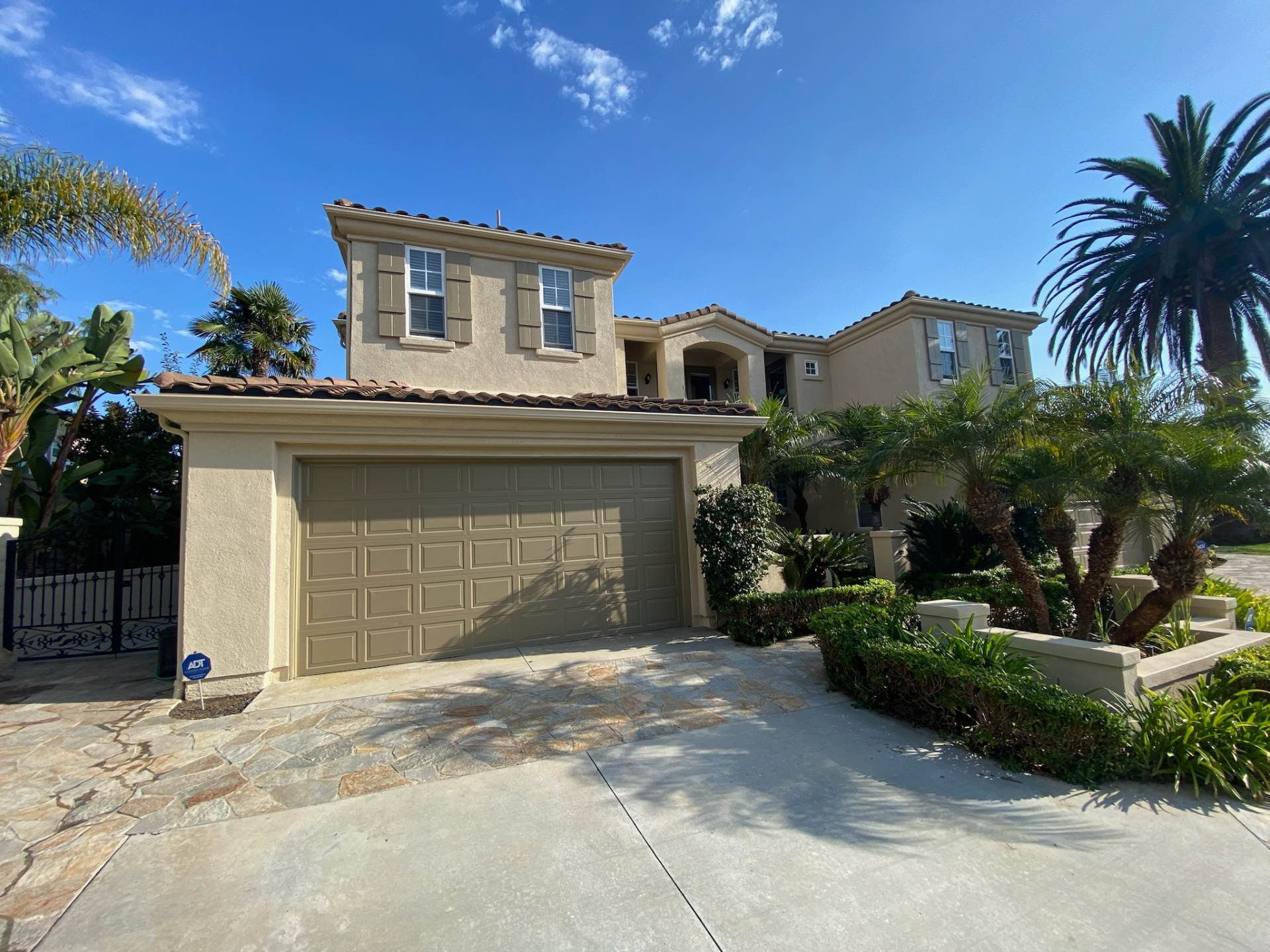
Surface Comparison for San Diego Homeowners
Painting Stucco vs Wood Siding
San Diego homes feature a variety of exterior surfaces, with stucco being most common throughout the county. Understanding the differences between painting stucco and wood siding helps you plan your exterior painting project effectively. Each surface requires different preparation, products, and techniques.
Side-by-Side Comparison
Stucco
Preparation Required
- Power washing to remove dirt
- Crack repair with elastomeric caulk
- Stucco patching for larger damage
- Alkali-resistant primer on new/repaired areas
Recommended Products
- • Elastomeric coatings (ideal)
- • Masonry primers
- • 100% acrylic latex paint
Paint Longevity
10-12 years
With elastomeric coatings
Wood Siding
Preparation Required
- Scraping loose and peeling paint
- Sanding rough areas and edges
- Wood rot repair and replacement
- Priming bare wood
- Caulking gaps and seams
Recommended Products
- • Oil-based or quality latex primer
- • 100% acrylic latex exterior paint
- • Flexible formula for wood movement
Paint Longevity
5-8 years
With premium acrylic paint
Common in Areas
Older homes, mountain communities, and custom builds in Alpine and rural areas
Key Differences to Know
Temperature and Movement
Stucco expands and contracts with temperature changes but doesn't absorb moisture like wood. Elastomeric coatings bridge the hairline cracks that develop from this movement. Wood siding absorbs and releases moisture, causing expansion and contraction that can crack rigid paints.
Repair Considerations
Stucco repairs require matching the existing texture—our texture matching expertise applies to exterior stucco as well. Wood siding repairs may involve replacing rotted boards, which adds to project scope and cost.
Cost Comparison
Stucco painting typically costs 10-20% more due to specialized coatings, but the longer paint life often makes it more economical over time. Wood siding costs vary dramatically based on condition—a well-maintained home costs less than one requiring extensive scraping and rot repair.
Frequently Asked Questions
Is it harder to paint stucco or wood siding?
Stucco requires specialized knowledge about elastomeric coatings, crack repair, and alkalinity. Wood siding requires more intensive prep work like scraping, sanding, and priming bare wood. Both require expertise, but the techniques differ significantly.
Does stucco or wood siding hold paint longer?
Stucco with elastomeric coatings typically holds paint longer (10-12 years) than wood siding (5-8 years). However, properly maintained wood with quality paint can also achieve excellent longevity. Both benefit from proper preparation and premium paints.
Can you use the same paint on stucco and wood?
While some premium acrylic paints work on both surfaces, stucco performs best with elastomeric or masonry-specific coatings. Wood requires flexible acrylic latex paint that expands with the wood. Using the right product for each surface ensures best results.
Which is more expensive to paint: stucco or wood siding?
Stucco painting typically costs 10-20% more due to specialized coatings (elastomeric paint costs more than standard latex). Wood siding costs depend heavily on condition—extensive scraping, rot repair, and priming can increase costs significantly.
Get Your Free Exterior Painting Estimate
Whether you have stucco, wood siding, or both, we'll assess your home and provide a detailed estimate.